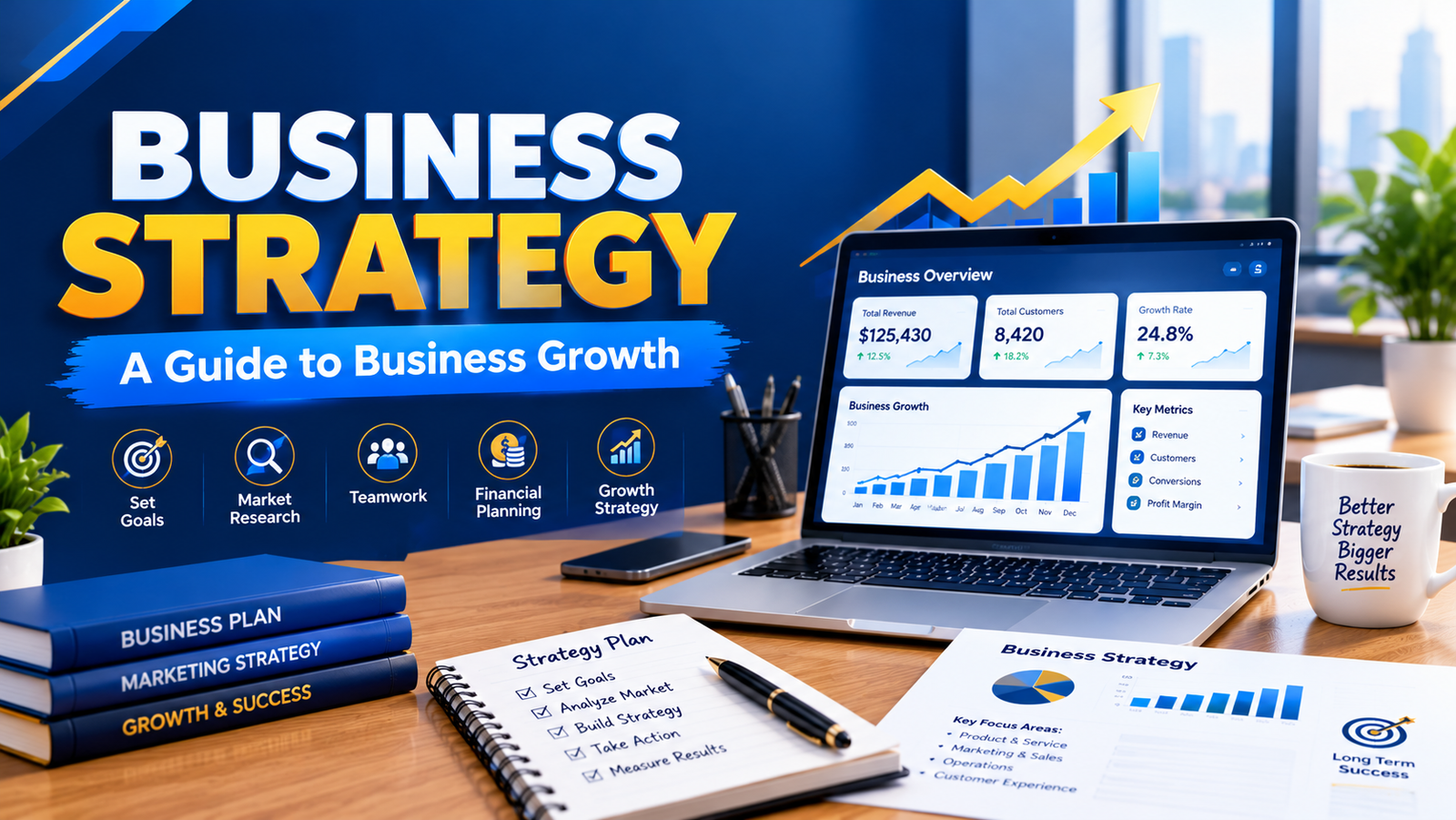
Every successful business needs a clear plan for reaching its goals. Whether you run a small business, manage an online store, or provide digital marketing services, having a strong business strategy can help you make better decisions and compete in the marketplace.
A business strategy helps you understand where your business is going, which customers you want to serve, and how you will create value for them. Without a clear strategy, you may waste time and money on activities that do not support your long-term goals.
In this guide, you will learn what business strategy is, why it matters, and how to create a practical strategy for your business.
What Is a Business Strategy?
A business strategy is a long-term approach that explains how a company plans to achieve its objectives and compete successfully.
It involves understanding your target market, identifying customer needs, analyzing competitors, managing resources, and deciding what makes your business different.
For example, an online business might focus on offering affordable products, providing excellent customer service, or specializing in a particular niche. These choices help the business stand out from competitors.
A good business strategy is not simply a list of goals. It explains how you will achieve those goals and why your approach is likely to work.
Why Is Business Strategy Important?
A well-planned business strategy provides direction and helps you focus on the activities that matter most.
1. Provides Clear Business Goals
Without clear goals, it can be difficult to measure progress. A business strategy helps you define what you want to achieve and establish priorities.
For example, a small digital marketing agency might aim to increase its number of regular clients over the next six months.
2. Helps You Understand Your Customers
Understanding your customers is essential for building a successful business.
Research their needs, challenges, preferences, and purchasing behavior. This information helps you develop products and services that solve real problems.
When your offerings match customer needs, you have a stronger foundation for attracting and retaining customers.
3. Creates a Competitive Advantage
Your business needs a reason for customers to choose it over other options.
You might compete through specialized expertise, better customer support, convenience, unique products, or a clearly defined target audience.
Trying to appeal to everyone can make your business difficult to distinguish. A focused strategy often makes it easier to communicate your value.
4. Improves Resource Management
Most businesses have limited time, money, and staff. A business strategy helps you decide where to invest these resources.
Instead of trying every marketing channel at once, you can prioritize the activities most likely to support your business goals.
5. Supports Long-Term Growth
A business strategy helps you plan for future opportunities and challenges. By reviewing your results and adapting to market changes, you can make more informed decisions about growth.
However, no strategy guarantees success. Results depend on execution, market conditions, customer demand, and other factors.
Key Elements of a Successful Business Strategy
An effective business strategy combines several important elements.
1. Business Vision and Mission
Your vision describes what you want your business to become in the future. Your mission explains why your business exists and whom it serves.
For example, a digital marketing business might aim to help small companies improve their online visibility through practical, affordable marketing services.
A clear vision and mission help guide everyday decisions.
2. Target Market Research
You need to understand the people or organizations most likely to purchase your products or services.
Consider their age range when relevant, industry, location, budget, needs, and buying habits. Use customer interviews, surveys, competitor research, and market data to test your assumptions.
Do not rely only on guesses about what customers want.
3. Competitor Analysis
Study businesses that serve a similar audience. Examine their products, pricing, strengths, weaknesses, marketing methods, and customer feedback.
The objective is not to copy competitors. It is to identify opportunities to serve customers differently or more effectively.
4. Unique Value Proposition
Your unique value proposition explains why customers should choose your business.
A strong value proposition is specific, relevant, and believable.
For example, instead of saying, “We provide the best digital marketing services,” a business could say, “We help small online stores improve their product pages and email campaigns.”
The second statement communicates a clearer service and target audience.
5. Marketing and Sales Plan
A strategy must explain how potential customers will discover your business and become paying customers.
Depending on your business, useful channels may include:
- Search engine optimization (SEO).
- Content marketing and blogging.
- Email marketing.
- Social media marketing.
- Paid advertising.
- Partnerships and referrals.
Choose channels based on your audience, budget, and objectives rather than trying to use every available platform.
6. Financial Planning
Understand your costs, expected revenue, pricing, cash flow, and available budget.
Estimate how much you can afford to spend on marketing, operations, technology, and hiring. Review actual results regularly and adjust your plans when necessary.
Revenue growth alone does not guarantee profitability.
7. Performance Measurement
Set measurable indicators to evaluate whether your strategy is working.
Depending on your goals, these might include sales revenue, profit margin, customer acquisition cost, repeat purchases, website conversions, or customer retention.
Review your results regularly and use the findings to improve your decisions.
How to Create a Business Strategy Step by Step
You do not need a complicated business plan to get started. Follow these practical steps.
Step 1: Define Your Business Goals
Decide what you want your business to accomplish.
Your goals might include increasing sales, entering a new market, improving customer retention, or launching a new service.
Make your goals specific and measurable, and set a realistic deadline.
Step 2: Identify Your Ideal Customer
Describe the customer you want to serve. Identify their main problems, what they value, and what might prevent them from purchasing your product or service.
The more clearly you understand your audience, the easier it becomes to design relevant offerings and marketing messages.
Step 3: Analyze the Market
Research customer demand, industry trends, competitors, and potential risks.
Look for unmet customer needs or areas where existing businesses provide a poor experience.
Validate important assumptions before investing heavily in a new idea.
Step 4: Choose Your Competitive Advantage
Decide what your business will do particularly well.
You could focus on affordability, specialized knowledge, convenience, product quality, personalization, or customer support.
Choose an advantage that matters to customers and that your business can realistically deliver.
Step 5: Develop an Action Plan
Turn your strategy into specific tasks.
For example, a small online business could create a content calendar, improve its website, launch an email newsletter, and test a new sales offer.
Assign responsibilities, deadlines, and budgets to each important task.
Step 6: Measure Your Results
Choose a few metrics that directly relate to your goals.
If your goal is to increase online sales, monitor qualified website traffic, conversion rates, average order value, and profit.
Avoid focusing on numbers that look impressive but do not help you make better business decisions.
Step 7: Review and Adjust
Review your progress monthly or quarterly, depending on your business needs.
Identify what is working, what is failing, and what has changed in the market. Continue effective activities, improve weak areas, and stop investing in approaches that consistently fail to deliver value.
A business strategy should provide direction without preventing you from adapting to new information.
Common Business Strategy Mistakes to Avoid
Even a promising business can struggle when its strategy is poorly designed or executed.
Setting vague goals: Goals such as “grow the business” are difficult to measure. Define the result you want and when you want to achieve it.
Ignoring customer needs: A product or service may fail if it does not solve a meaningful problem for its intended audience.
Trying to target everyone: An overly broad target market can make your marketing messages less effective.
Copying competitors blindly: What works for another company may not suit your resources, customers, or business model.
Spending without measuring results: Marketing and operational spending should be evaluated against clear objectives.
Failing to adapt: Customer expectations, competition, and market conditions can change. Review your assumptions and update your strategy when necessary.
Confusing activity with progress: Posting frequently on social media or publishing many blog articles is not the same as achieving business results. Measure outcomes, not just the number of tasks completed.
How Digital Marketing Supports Business Strategy
Digital marketing can help businesses reach their target audiences, communicate their value, and generate sales.
SEO can improve the chances of attracting relevant visitors through search engines. Content marketing can answer customer questions and build credibility. Email marketing can maintain relationships with subscribers who have given permission to receive messages. Social media can help businesses engage with relevant communities.
The right mix depends on your audience and business goals.
For example, a business selling digital products might publish helpful blog posts, build an email list, and create product comparison pages. It can then measure which activities generate qualified visitors and profitable sales.
Digital marketing works best when it supports a clear business strategy rather than operating as a collection of disconnected activities.
Final Thoughts
Business strategy is essential for making informed decisions, serving customers effectively, and building a sustainable business.
Start by defining your goals, understanding your target audience, researching your competitors, and identifying what makes your business valuable. Then turn those decisions into an action plan and measure your results.
You do not need to predict the future perfectly. You need a clear direction, a realistic plan, and the discipline to learn from your results.
Ready to improve your business? Write down your most important business goal, identify the customers you want to serve, and choose three practical actions you can take this month to move closer to that goal.