Media Management

Media Management: A Beginner’s Guide to Strategy, Tools & Success

In today’s digital world, media plays an essential role in how businesses communicate with customers, build their brands, and promote their products or services. From social media platforms and websites to online advertisements and public relations, effective media management helps organizations reach the right audience with the right message.

Media management is the process of planning, organizing, creating, distributing, monitoring, and evaluating media content across different channels. Whether you run a small business, manage a digital marketing agency, or create online content, understanding media management can help you improve communication and achieve better results.

What Is Media Management?

Media management involves coordinating media activities to ensure that content reaches the intended audience effectively. It combines strategic planning, content creation, audience research, scheduling, budgeting, and performance analysis.

For example, a business might use Facebook to engage with customers, YouTube to publish videos, Instagram to showcase products, and a website to share detailed information. Media management helps keep these channels organized and ensures that the brand communicates consistently.

The main goal is not simply to publish more content. It is to publish the right content, on the right platform, at the right time.

Why Is Media Management Important?

6 Wege zur effektiven Social Media Content Strategie 2026
Social Media Advertising Tourismus

How to find influencers for a small business: 9 tips

10

Effective media management offers several benefits for businesses and content creators.

1. Builds Brand Awareness

Consistent and valuable content helps people recognize your business. A clear visual identity, recognizable messaging, and regular communication make your brand easier to remember.

2. Improves Audience Engagement

Media management helps businesses understand what their audiences want. By publishing relevant posts, videos, articles, and other content, organizations can encourage comments, shares, discussions, and customer feedback.

3. Saves Time and Resources

Planning content in advance reduces last-minute work. Content calendars, scheduling tools, and organized workflows help teams manage multiple platforms without wasting time.

4. Supports Marketing Goals

A well-planned media strategy connects content with specific business objectives, such as generating website traffic, increasing product sales, collecting leads, or building customer loyalty.

5. Measures Performance

Media management makes it easier to identify which campaigns are working. By tracking reach, engagement, clicks, conversions, and other relevant metrics, businesses can make better marketing decisions.

Key Components of Media Management

Media management includes several important activities that work together.

Social Media Marketing Plan Template: Your Complete Guide

1. Media Planning

Define your goals, target audience, budget, content themes, and preferred platforms before launching a campaign.

Best AI Video Generators of 2026 Ranked | Blog Picasso IA

2. Content Creation

Develop useful and engaging blog posts, graphics, videos, photographs, advertisements, and other materials that match your brand.

3. Content Distribution

Publish content through suitable channels, including websites, social media, email newsletters, and online advertising platforms.

How Landing Page Optimization Can Increase Your PPC Conversion Rates

4. Performance Monitoring

Review analytics to understand audience behavior, measure campaign results, and identify opportunities for improvement.

How to Create an Effective Media Management Strategy

You do not need a large team or an expensive budget to manage media effectively. Start with a simple, structured approach.

Step 1: Set Clear Goals

Decide what you want your media activities to achieve. Your goals might include increasing brand awareness, gaining more website visitors, generating leads, or improving customer engagement.

Make your goals measurable so you can evaluate progress.

Step 2: Identify Your Target Audience

Understand your audience’s interests, needs, challenges, age range, and online behavior. This information helps you choose relevant topics, appropriate language, and suitable media platforms.

Avoid trying to reach everyone. A clearly defined audience makes content planning more effective.

Step 3: Choose the Right Platforms

Different platforms serve different purposes.

  • Facebook: Community engagement, business updates, and promotional content.
  • Instagram: Visual storytelling, product photography, and short-form videos.
  • YouTube: Tutorials, educational videos, demonstrations, and reviews.
  • LinkedIn: Professional networking, industry insights, and business communication.
  • Websites and blogs: Detailed articles, search engine traffic, and long-term information resources.
  • Email marketing: Direct communication, newsletters, and customer retention.

Choose platforms based on your audience and goals rather than trying to maintain every channel.

Step 4: Develop a Content Calendar

A content calendar helps you organize what to publish and when to publish it. Plan topics, formats, publication dates, responsible team members, and calls to action.

For example:

DayContent typePurpose
MondayEducational postBuild trust
TuesdayShort videoIncrease engagement
WednesdayBlog articleAttract website visitors
ThursdayCustomer storyBuild credibility
FridayPromotional postGenerate leads or sales

Adjust this schedule to suit your audience, available resources, and actual performance.

Step 5: Maintain Consistent Branding

Use consistent colors, fonts, logos, tone of voice, and messaging across your media channels. Consistency helps audiences recognize your brand and understand what it represents.

However, consistency does not mean publishing identical content everywhere. Adapt each piece to the platform and audience.

Step 6: Track Results and Improve

Review your performance regularly. Identify the content that generates meaningful engagement, qualified leads, website visits, or sales.

Use these insights to refine your strategy. Do not judge success by follower counts or likes alone; focus on the metrics that support your goals.

Best Tools for Media Management

The right tools can simplify content planning, publishing, design, and analysis.

Sosyal Medya için Görsel Hazırlama Programı | Canva

Canva

Create social media graphics, promotional materials, presentations, and branded visual content.

Website: canva.com

Meta Business Suite: The Complete Guide | Sprinklr

Meta Business Suite

Manage supported Facebook and Instagram business activities, schedule content, and review performance insights.

Website: business.facebook.com

Website Data for Architecture Firms: 4 Questions Answered with Analytics

Google Analytics

Understand website traffic, user behavior, and relevant conversion activity.

Website: analytics.google.com

Trello para times de Marketing | Trello

Trello

Organize content tasks, manage deadlines, and coordinate work across a marketing team.

Website: trello.com

Start with the tools that solve your immediate problems. Buying several subscriptions before establishing a workable process is usually unnecessary.

Common Media Management Mistakes to Avoid

Even a well-funded business can waste time and money through poor media management. Watch out for these common mistakes:

  • Posting without a strategy: Random content makes it difficult to achieve consistent results.
  • Ignoring audience feedback: Comments, questions, and customer concerns provide useful information.
  • Publishing inconsistently: Long gaps between posts can weaken audience engagement.
  • Using the same content everywhere: Each platform has different audience expectations and content formats.
  • Ignoring analytics: Without measurement, you cannot reliably identify what is working.
  • Neglecting content rights: Use images, videos, music, and other materials only when you have the necessary permission or license.
  • Failing to prepare for problems: Establish a process for handling complaints, misinformation, negative feedback, and account security issues.

Avoiding these mistakes helps create a more professional and reliable media presence.

The Future of Media Management

Media management continues to evolve as digital platforms, audience expectations, and technology change. Artificial intelligence can assist with content ideas, drafting, scheduling workflows, audience analysis, and reporting.

Short-form video, personalized content, interactive media, and data-informed decision-making also create new opportunities for businesses.

However, technology alone does not guarantee success. Human judgment, originality, accuracy, responsible communication, and an understanding of customer needs remain essential.

Businesses that combine useful technology with a clear strategy will be better positioned to adapt to changing media trends.

Conclusion

Media management is an important part of modern communication and digital marketing. It helps businesses organize their content, maintain consistent branding, connect with their target audiences, and measure the results of their efforts.

The best approach is to begin with clear goals, choose the right platforms, create a realistic content calendar, and monitor performance regularly. You can improve your strategy over time by learning from real audience behavior instead of relying on assumptions.

Whether you are an entrepreneur, blogger, marketer, or business owner, effective media management can help you communicate more clearly and build a stronger online presence.

Start small, stay consistent, and let measurable results guide your next decision.

Business Strategy Growth Workspace

Business Strategy for Beginners: A Complete Guide to Business Growth

Every successful business needs a clear plan for reaching its goals. Whether you run a small business, manage an online store, or provide digital marketing services, having a strong business strategy can help you make better decisions and compete in the marketplace.

A business strategy helps you understand where your business is going, which customers you want to serve, and how you will create value for them. Without a clear strategy, you may waste time and money on activities that do not support your long-term goals.

In this guide, you will learn what business strategy is, why it matters, and how to create a practical strategy for your business.

What Is a Business Strategy?

A business strategy is a long-term approach that explains how a company plans to achieve its objectives and compete successfully.

It involves understanding your target market, identifying customer needs, analyzing competitors, managing resources, and deciding what makes your business different.

For example, an online business might focus on offering affordable products, providing excellent customer service, or specializing in a particular niche. These choices help the business stand out from competitors.

A good business strategy is not simply a list of goals. It explains how you will achieve those goals and why your approach is likely to work.

Why Is Business Strategy Important?

A well-planned business strategy provides direction and helps you focus on the activities that matter most.

1. Provides Clear Business Goals

Without clear goals, it can be difficult to measure progress. A business strategy helps you define what you want to achieve and establish priorities.

For example, a small digital marketing agency might aim to increase its number of regular clients over the next six months.

2. Helps You Understand Your Customers

Understanding your customers is essential for building a successful business.

Research their needs, challenges, preferences, and purchasing behavior. This information helps you develop products and services that solve real problems.

When your offerings match customer needs, you have a stronger foundation for attracting and retaining customers.

3. Creates a Competitive Advantage

Your business needs a reason for customers to choose it over other options.

You might compete through specialized expertise, better customer support, convenience, unique products, or a clearly defined target audience.

Trying to appeal to everyone can make your business difficult to distinguish. A focused strategy often makes it easier to communicate your value.

4. Improves Resource Management

Most businesses have limited time, money, and staff. A business strategy helps you decide where to invest these resources.

Instead of trying every marketing channel at once, you can prioritize the activities most likely to support your business goals.

5. Supports Long-Term Growth

A business strategy helps you plan for future opportunities and challenges. By reviewing your results and adapting to market changes, you can make more informed decisions about growth.

However, no strategy guarantees success. Results depend on execution, market conditions, customer demand, and other factors.

Key Elements of a Successful Business Strategy

An effective business strategy combines several important elements.

1. Business Vision and Mission

Your vision describes what you want your business to become in the future. Your mission explains why your business exists and whom it serves.

For example, a digital marketing business might aim to help small companies improve their online visibility through practical, affordable marketing services.

A clear vision and mission help guide everyday decisions.

2. Target Market Research

You need to understand the people or organizations most likely to purchase your products or services.

Consider their age range when relevant, industry, location, budget, needs, and buying habits. Use customer interviews, surveys, competitor research, and market data to test your assumptions.

Do not rely only on guesses about what customers want.

3. Competitor Analysis

Study businesses that serve a similar audience. Examine their products, pricing, strengths, weaknesses, marketing methods, and customer feedback.

The objective is not to copy competitors. It is to identify opportunities to serve customers differently or more effectively.

4. Unique Value Proposition

Your unique value proposition explains why customers should choose your business.

A strong value proposition is specific, relevant, and believable.

For example, instead of saying, “We provide the best digital marketing services,” a business could say, “We help small online stores improve their product pages and email campaigns.”

The second statement communicates a clearer service and target audience.

5. Marketing and Sales Plan

A strategy must explain how potential customers will discover your business and become paying customers.

Depending on your business, useful channels may include:

  • Search engine optimization (SEO).
  • Content marketing and blogging.
  • Email marketing.
  • Social media marketing.
  • Paid advertising.
  • Partnerships and referrals.

Choose channels based on your audience, budget, and objectives rather than trying to use every available platform.

6. Financial Planning

Understand your costs, expected revenue, pricing, cash flow, and available budget.

Estimate how much you can afford to spend on marketing, operations, technology, and hiring. Review actual results regularly and adjust your plans when necessary.

Revenue growth alone does not guarantee profitability.

7. Performance Measurement

Set measurable indicators to evaluate whether your strategy is working.

Depending on your goals, these might include sales revenue, profit margin, customer acquisition cost, repeat purchases, website conversions, or customer retention.

Review your results regularly and use the findings to improve your decisions.

How to Create a Business Strategy Step by Step

You do not need a complicated business plan to get started. Follow these practical steps.

Step 1: Define Your Business Goals

Decide what you want your business to accomplish.

Your goals might include increasing sales, entering a new market, improving customer retention, or launching a new service.

Make your goals specific and measurable, and set a realistic deadline.

Step 2: Identify Your Ideal Customer

Describe the customer you want to serve. Identify their main problems, what they value, and what might prevent them from purchasing your product or service.

The more clearly you understand your audience, the easier it becomes to design relevant offerings and marketing messages.

Step 3: Analyze the Market

Research customer demand, industry trends, competitors, and potential risks.

Look for unmet customer needs or areas where existing businesses provide a poor experience.

Validate important assumptions before investing heavily in a new idea.

Step 4: Choose Your Competitive Advantage

Decide what your business will do particularly well.

You could focus on affordability, specialized knowledge, convenience, product quality, personalization, or customer support.

Choose an advantage that matters to customers and that your business can realistically deliver.

Step 5: Develop an Action Plan

Turn your strategy into specific tasks.

For example, a small online business could create a content calendar, improve its website, launch an email newsletter, and test a new sales offer.

Assign responsibilities, deadlines, and budgets to each important task.

Step 6: Measure Your Results

Choose a few metrics that directly relate to your goals.

If your goal is to increase online sales, monitor qualified website traffic, conversion rates, average order value, and profit.

Avoid focusing on numbers that look impressive but do not help you make better business decisions.

Step 7: Review and Adjust

Review your progress monthly or quarterly, depending on your business needs.

Identify what is working, what is failing, and what has changed in the market. Continue effective activities, improve weak areas, and stop investing in approaches that consistently fail to deliver value.

A business strategy should provide direction without preventing you from adapting to new information.

Common Business Strategy Mistakes to Avoid

Even a promising business can struggle when its strategy is poorly designed or executed.

Setting vague goals: Goals such as “grow the business” are difficult to measure. Define the result you want and when you want to achieve it.

Ignoring customer needs: A product or service may fail if it does not solve a meaningful problem for its intended audience.

Trying to target everyone: An overly broad target market can make your marketing messages less effective.

Copying competitors blindly: What works for another company may not suit your resources, customers, or business model.

Spending without measuring results: Marketing and operational spending should be evaluated against clear objectives.

Failing to adapt: Customer expectations, competition, and market conditions can change. Review your assumptions and update your strategy when necessary.

Confusing activity with progress: Posting frequently on social media or publishing many blog articles is not the same as achieving business results. Measure outcomes, not just the number of tasks completed.

How Digital Marketing Supports Business Strategy

Digital marketing can help businesses reach their target audiences, communicate their value, and generate sales.

SEO can improve the chances of attracting relevant visitors through search engines. Content marketing can answer customer questions and build credibility. Email marketing can maintain relationships with subscribers who have given permission to receive messages. Social media can help businesses engage with relevant communities.

The right mix depends on your audience and business goals.

For example, a business selling digital products might publish helpful blog posts, build an email list, and create product comparison pages. It can then measure which activities generate qualified visitors and profitable sales.

Digital marketing works best when it supports a clear business strategy rather than operating as a collection of disconnected activities.

Final Thoughts

Business strategy is essential for making informed decisions, serving customers effectively, and building a sustainable business.

Start by defining your goals, understanding your target audience, researching your competitors, and identifying what makes your business valuable. Then turn those decisions into an action plan and measure your results.

You do not need to predict the future perfectly. You need a clear direction, a realistic plan, and the discipline to learn from your results.

Ready to improve your business? Write down your most important business goal, identify the customers you want to serve, and choose three practical actions you can take this month to move closer to that goal.

Content Writing_ A Beginner’s Guide

Content Writing for Beginners: A Complete Guide to Creating Content

Content is an essential part of digital marketing. Whether you run a blog, manage a business website, or promote products online, quality content helps you communicate with your audience and share valuable information.

Content writing is more than simply putting words on a page. It involves understanding your audience, choosing the right topics, organizing information, and writing in a way that keeps readers interested.

In this beginner’s guide, you will learn what content writing is, why it matters, and how to create content that attracts readers and supports your online goals.

What Is Content Writing?

Content writing is the process of planning, researching, writing, and editing content for digital or printed platforms.

In digital marketing, content writing is commonly used for blog posts, website pages, product descriptions, social media posts, email newsletters, and online guides.

For example, a digital marketing company might publish an article explaining how to improve website rankings. An online store might write product descriptions that help customers understand the features and benefits of its products.

The purpose of good content writing is to provide useful information, answer questions, and help readers take the next appropriate step.

Why Is Content Writing Important?

Content writing plays an important role in building an online presence. Here are some of its key benefits.

1. Attracts Your Target Audience

Useful content helps people discover your website when they search for information online.

For example, if you publish an article about email marketing for beginners, people interested in learning email marketing may find your website through search engines.

Understanding your audience’s interests helps you choose topics that are relevant to their needs.

2. Supports Search Engine Optimization

Search engines need to understand what your pages are about. Clear headings, descriptive titles, relevant information, and helpful internal links can make your content easier to navigate and understand.

However, simply adding keywords does not guarantee higher rankings. Your content must genuinely satisfy the reader’s needs.

3. Builds Trust and Credibility

Readers are more likely to trust a website that provides accurate, clear, and helpful information.

By publishing well-researched articles and practical guides, you can demonstrate your knowledge and establish your website as a useful resource.

4. Helps Promote Products and Services

Content writing can explain how a product works, describe its benefits, answer common questions, and help potential customers make informed decisions.

For example, an affiliate marketing blog can publish product reviews and comparisons to help readers understand which tools may suit their needs.

Honest recommendations are important. Disclose affiliate relationships and avoid making unsupported claims about products.

5. Encourages Audience Engagement

Good content gives readers a reason to stay on your website, explore related articles, subscribe to your newsletter, or contact your business.

When your content is useful and relevant, it can help build long-term relationships with your audience.

Different Types of Content Writing

Content writing covers many formats. Understanding the main types can help you choose the right approach for your website.

1. Blog Writing

Blog writing involves creating articles about specific topics to educate, inform, or entertain readers.

Examples include:

  • Digital marketing tips.
  • Technology tutorials.
  • Product reviews.
  • Business growth strategies.
  • Beginner’s guides.

Blog posts are particularly useful for websites that want to build an audience through informative content.

2. SEO Content Writing

SEO content writing focuses on creating useful content that aligns with what people search for online.

It includes understanding search intent, researching relevant keywords, organizing content with descriptive headings, and linking to related resources.

The goal is to help readers find accurate answers while making the page understandable to search engines.

3. Website Content Writing

Website content writing involves creating pages that explain a business, organization, or service.

Common examples include:

  • Home pages.
  • About pages.
  • Service pages.
  • Contact pages.
  • Frequently asked questions.

Effective website content communicates clearly and helps visitors understand what the organization offers.

4. Copywriting

Copywriting focuses on persuasive writing intended to encourage a specific action, such as purchasing a product, signing up for a newsletter, or requesting a service.

Examples include advertisements, landing pages, sales pages, and promotional emails.

Good copywriting explains relevant benefits without misleading the audience.

5. Social Media Content Writing

Social media content writing involves creating captions, posts, and short-form content for platforms such as Facebook, Instagram, and LinkedIn.

The writing style often needs to be concise, engaging, and appropriate for the platform and audience.

How to Write Great Content: A Step-by-Step Guide

You do not need to be an expert writer to start creating useful content. Following a clear process can improve your writing.

Step 1: Understand Your Audience

Before writing, identify who will read your content.

Ask yourself:

  • What problems are they trying to solve?
  • What information do they need?
  • How much do they already know about the topic?
  • What questions might they ask?

For example, beginners may need simple explanations and practical examples, while experienced marketers may prefer advanced strategies and detailed analysis.

Step 2: Choose a Relevant Topic

Select a topic that matches your audience’s interests and your website’s purpose.

If your website focuses on digital marketing, possible topics include SEO management, email marketing, social media marketing, and content strategy.

Choose topics you can cover accurately and meaningfully rather than publishing articles simply to increase your post count.

Step 3: Research Before Writing

Research helps you understand a topic and avoid inaccurate information.

Review trustworthy sources, official documentation, relevant industry studies, and expert explanations.

Look for questions readers frequently ask and identify gaps in existing articles that your content could address.

Never copy another website’s writing. Use research to develop your own explanations, examples, and insights.

Step 4: Create an Outline

Organize your ideas before writing the full article.

A simple blog post outline might include:

  • Introduction.
  • Definition of the topic.
  • Main benefits.
  • Practical steps.
  • Common mistakes.
  • Conclusion.

An outline helps you maintain a logical flow and reduces unnecessary repetition.

Step 5: Write a Clear Introduction

Your introduction should explain the topic and tell readers what they will learn.

Avoid long introductions that delay the answer. Start with the reader’s problem, explain why it matters, and introduce the solution.

For example, a blog post about SEO management could begin by explaining how website owners can improve search visibility and attract relevant visitors.

Step 6: Use Simple and Readable Language

Good content should be easy to understand.

Follow these practices:

  • Use short, clear sentences.
  • Break long paragraphs into smaller sections.
  • Use descriptive headings.
  • Explain technical terms when necessary.
  • Include practical examples.
  • Remove unnecessary words.

Simple writing does not mean shallow writing. You can explain complex ideas accurately without making them unnecessarily difficult to understand.

Step 7: Optimize Your Content for SEO

If you are writing for a website, consider basic SEO practices.

Write a descriptive page title, use relevant headings, create a readable URL, and include useful internal links.

Use your target keyword naturally where it helps readers understand the topic. Avoid repeating it excessively.

You should also write descriptive image alt text and make sure your page works well on mobile devices.

Step 8: Edit and Proofread

Your first draft is rarely your best version.

Before publishing, check:

  • Spelling and grammar.
  • Factual accuracy.
  • Sentence clarity.
  • Heading structure.
  • Repeated ideas.
  • Broken links.
  • Formatting on mobile devices.

Reading your article aloud can help you identify awkward sentences and unclear explanations.

Step 9: Publish and Improve

After publishing, share your article through relevant channels and monitor how readers respond.

Review search performance, visitor engagement, and conversions where appropriate. Update the article when information becomes outdated or when you discover ways to make it more useful.

Content writing is an ongoing process of learning and improvement.

Common Content Writing Mistakes to Avoid

Beginners often make mistakes that reduce the quality and usefulness of their content.

Writing without a clear purpose: Every article should serve a specific reader need or business goal.

Ignoring the audience: Content that focuses only on what the writer wants to say may fail to answer the reader’s actual questions.

Copying other websites: Plagiarism damages credibility and can create copyright problems.

Overusing keywords: Keyword stuffing makes content unnatural and can violate search engine spam policies.

Using misleading headlines: Your headline should accurately represent the information in your article.

Ignoring proofreading: Grammar mistakes, broken links, and confusing formatting can make your website look unprofessional.

Publishing without adding value: Rewriting information that already exists elsewhere without offering meaningful insights gives readers little reason to choose your article.

Avoiding these mistakes will help you create more useful and trustworthy content.

Can AI Tools Help With Content Writing?

AI writing tools can help with brainstorming topics, creating outlines, generating draft ideas, improving grammar, and organizing information.

However, AI-generated content still requires human judgment.

Check facts, verify sources, add original examples, and make sure the final article addresses your audience’s needs. Do not publish unreviewed material simply because it sounds professional.

The most effective approach is to use AI as an assistant rather than relying on it to replace research, expertise, and editorial judgment.

Final Thoughts

Content writing is a valuable skill for bloggers, freelancers, marketers, and business owners. It helps you share knowledge, answer questions, communicate with customers, and build a stronger online presence.

To become a better content writer, focus on understanding your audience, researching your topics, organizing your ideas, and editing your work carefully.

You do not need to write perfect articles from the beginning. Practice consistently, learn from reader feedback, and improve your content over time.

Ready to start writing? Choose a topic your audience cares about, create a simple outline, and publish an article that provides clear, practical value.

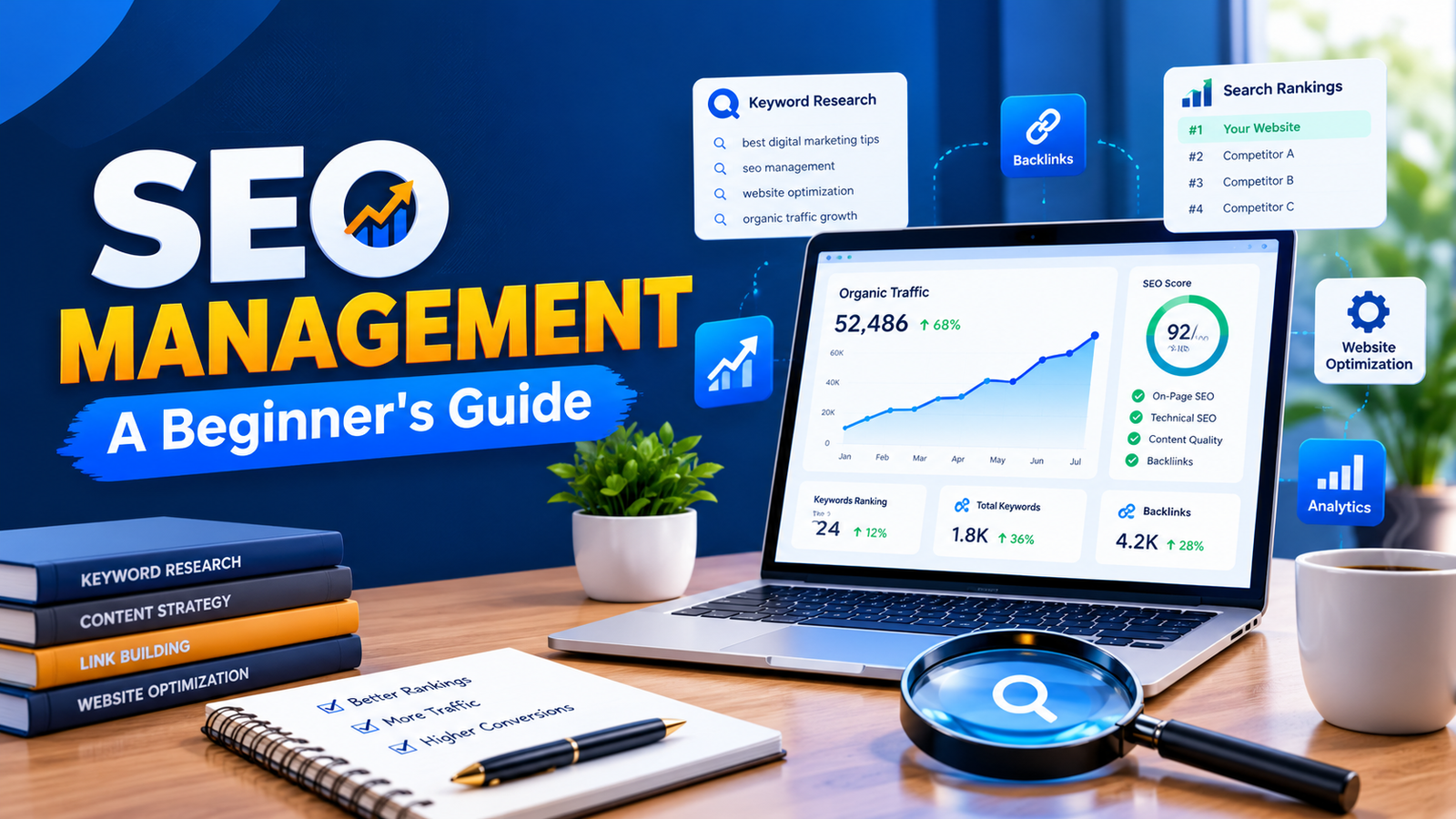
SEO Management_ Beginner’s Guide

SEO Management: A Complete Beginner’s Guide to Improving Website Rankings

In today’s digital world, having a website is not enough. If people cannot find your website on search engines like Google, you may miss valuable opportunities to attract visitors and grow your business. This is where SEO management becomes important.

SEO management helps you improve your website’s visibility in search results, attract relevant visitors, and build a stronger online presence. Whether you are a blogger, freelancer, small business owner, or digital marketer, understanding SEO management can help you achieve better results online.

In this guide, we will explain what SEO management is, why it matters, and how you can use it to improve your website.

What Is SEO Management?

SEO management is the process of planning, implementing, monitoring, and improving strategies that help a website perform better in organic search results.

SEO stands for Search Engine Optimization. It involves making your website easier for search engines to understand while providing useful content that meets the needs of your audience.

SEO management includes several important activities, such as keyword research, content optimization, technical SEO, link building, and performance tracking.

The goal is not simply to attract more visitors. It is to attract people who are genuinely interested in your content, products, or services.

Why Is SEO Management Important?

Effective SEO management can help businesses and website owners achieve several benefits.

1. Improve Search Engine Visibility

A well-optimized website has a better chance of appearing in relevant search results. Greater visibility can help potential customers discover your website when they search for information related to your business.

However, SEO does not guarantee a particular ranking because search engines consider many factors.

2. Attract Relevant Website Visitors

SEO helps you target keywords that match what your audience is searching for. For example, a digital marketing blog might publish articles about SEO tools, keyword research, or website optimization.

When your content answers these questions effectively, it can attract relevant visitors.

3. Build Trust and Credibility

People often use search engines to research products, compare services, and find solutions to their problems.

Publishing accurate, helpful, and well-organized content can help establish your website as a useful resource in your industry.

4. Support Long-Term Business Growth

Paid advertising can bring traffic while your campaigns are running. SEO can continue attracting organic visitors after your content is published, although rankings and traffic may change over time.

Consistent SEO management helps you identify opportunities, improve existing pages, and adapt to changes in search behavior.

The Main Components of SEO Management

Successful SEO management involves several connected activities.

1. Keyword Research

Keyword research helps you discover the words and phrases people use when searching online.

For example, if you operate a digital marketing blog, your target keywords might include:

  • SEO management for beginners
  • Best SEO tools for small businesses
  • How to improve website rankings
  • On-page SEO checklist
  • Technical SEO guide

Choose keywords based on search intent, relevance, competition, and your audience’s needs.

Do not focus only on keywords with high search volume. Specific, relevant keywords may attract visitors who are more likely to engage with your content.

2. On-Page SEO

On-page SEO involves optimizing individual web pages to help search engines and readers understand their content.

Important on-page SEO practices include:

  • Writing clear and descriptive page titles.
  • Creating useful meta descriptions.
  • Using headings to organize content.
  • Including relevant keywords naturally.
  • Writing descriptive image alt text.
  • Adding internal links to related articles.
  • Creating readable URLs.
  • Providing accurate, helpful information.

Avoid stuffing keywords into your content. Your writing should sound natural and provide genuine value to readers.

3. Technical SEO

Technical SEO focuses on the technical aspects of your website that affect crawling, indexing, and user experience.

Important areas include:

  • Ensuring search engines can access important pages.
  • Checking for indexing problems.
  • Improving website loading performance.
  • Making the website mobile-friendly.
  • Using HTTPS to secure connections.
  • Fixing broken links and redirect issues.
  • Creating and maintaining an XML sitemap when appropriate.
  • Reviewing canonical tags and duplicate content issues.

A website can contain excellent content and still struggle in search results if important technical problems prevent search engines from accessing or understanding its pages.

4. Content Optimization

Content is a major part of an effective SEO strategy.

Create articles, guides, tutorials, and service pages that answer real questions from your target audience.

For example, a website about digital marketing could publish content about keyword research, content marketing, SEO tools, and website performance.

To improve your content:

  • Understand the reader’s search intent.
  • Answer the main question clearly.
  • Use headings and short paragraphs.
  • Include practical examples.
  • Support factual claims with reliable sources.
  • Update outdated information when necessary.
  • Add relevant internal links.

Publishing more articles does not automatically produce better results. Focus on usefulness, accuracy, originality, and relevance.

5. Link Building

Backlinks are links from other websites pointing to your website. Relevant, trustworthy backlinks can help search engines understand your website’s reputation and connections within your industry.

You can work toward earning backlinks by:

  • Publishing original research and useful resources.
  • Creating comprehensive educational guides.
  • Building genuine relationships with other website owners.
  • Contributing valuable expert commentary.
  • Promoting content to relevant publishers and communities.

Avoid buying manipulative links or participating in link schemes. These tactics can violate search engine spam policies and put your website at risk.

6. SEO Performance Tracking

SEO management requires regular monitoring to understand what is working and what needs improvement.

Useful tools include Google Search Console and Google Analytics.

You can monitor metrics such as:

  • Organic search clicks.
  • Search impressions.
  • Click-through rate.
  • Average search position.
  • Organic landing-page traffic.
  • Conversions and inquiries.
  • Indexing and technical issues.

Use this information to identify pages that need better titles, more useful content, improved internal links, or technical fixes.

Best Tools for SEO Management

The right tools can make SEO management easier and more organized.

Google Search Console: Helps you monitor your website’s search performance, indexing information, and certain technical issues.

Google Analytics: Helps you understand website traffic, visitor behavior, and conversions.

Ahrefs: Offers tools for backlink analysis, keyword research, and competitor research.

Semrush: Provides keyword research, competitive analysis, site auditing, and other SEO features.

Screaming Frog SEO Spider: Helps you crawl websites and identify issues such as broken links, missing page titles, and duplicate metadata.

Yoast SEO: A WordPress plugin that helps you manage important on-page SEO elements.

Some tools offer free features, while others require paid subscriptions. Compare their current plans before choosing a solution.

Common SEO Management Mistakes to Avoid

Even a well-designed SEO strategy can fail if you make avoidable mistakes.

Ignoring search intent: Your content must address what people actually want to find.

Keyword stuffing: Repeating keywords unnaturally can make content difficult to read and may violate spam policies.

Neglecting technical SEO: Crawling, indexing, and performance problems can limit your website’s visibility.

Publishing low-quality content: Articles created mainly to target keywords without providing meaningful value are unlikely to build a strong audience.

Ignoring mobile users: Your website should be easy to navigate on smartphones and tablets.

Expecting instant results: SEO usually requires consistent work and patience. Improvements may take weeks or months, depending on your website, competition, and the changes you make.

How to Create a Simple SEO Management Plan

If you are new to SEO, start with a manageable plan.

Week 1: Website Audit

Review your website’s structure, mobile usability, page speed, indexing, and existing content. Identify the most important problems.

Week 2: Keyword Research

Find relevant keywords for your audience. Group them by topic and search intent, then decide which pages should target each topic.

Week 3: On-Page Optimization

Improve your most important pages. Review titles, headings, content quality, internal links, and image alt text.

Week 4: Content and Performance Review

Publish useful content, review your Search Console data, and identify the next improvements to make.

After the first month, continue monitoring performance and prioritizing tasks according to their likely impact.

Final Thoughts

SEO management is an ongoing process that combines research, content creation, technical improvements, and performance analysis.

You do not need to implement every strategy at once. Start by understanding your audience, fixing important website problems, and publishing useful content that answers real questions.

With consistent effort and careful measurement, SEO management can help you improve your website’s search visibility, attract relevant visitors, and support your long-term digital marketing goals.

Ready to improve your website’s SEO? Start by reviewing your website in Google Search Console, identifying your most important pages, and creating a practical optimization plan.

Email Marketing Beginner’s Guide

Email Marketing for Beginners: A Simple Guide to Growing Your Business

Email marketing is one of the most effective ways to connect with customers, promote products, and grow an online business. Whether you are a beginner, blogger, freelancer, or business owner, email marketing can help you reach the right audience and build long-term relationships.

In this guide, you will learn what email marketing is, why it matters, and how to get started.

What Is Email Marketing?

Email marketing is the process of sending emails to people who have agreed to receive messages from you. These emails can include business updates, helpful tips, product recommendations, special offers, and newsletters.

For example, if you run a blog, you can send your subscribers an email whenever you publish a new article. If you sell digital products, you can use email to introduce your products and share useful information with potential customers.

Why Is Email Marketing Important?

Email marketing offers several benefits for businesses and content creators.

1. Build Strong Customer Relationships

Regularly sharing helpful information allows you to build trust with your audience. Instead of focusing only on selling, provide content that solves your subscribers’ problems.

2. Drive Traffic to Your Website

You can include links to your latest blog posts, product reviews, and website pages in your emails. This encourages subscribers to visit your website and explore your content.

3. Promote Products and Services

Email marketing allows you to introduce new products, share special offers, and recommend relevant services to interested subscribers.

4. Reach Your Audience Directly

Unlike social media posts, which may not reach all your followers, emails go directly to subscribers’ inboxes. However, delivery is not guaranteed, and some emails may end up in spam folders.

How to Get Started With Email Marketing

Starting with email marketing does not have to be complicated. Follow these simple steps.

Step 1: Choose an Email Marketing Platform

First, choose a platform that helps you collect subscribers, create emails, and manage your campaigns. Popular options include Mailchimp, Brevo, and MailerLite.

Compare their current pricing, features, and subscriber limits before choosing one.

Step 2: Build Your Email List

Add a subscription form to your website where visitors can sign up to receive your emails.

You could offer a free checklist, beginner’s guide, or useful resource to encourage people to subscribe. Always obtain permission before sending marketing emails.

Step 3: Create Helpful Email Content

Your emails should provide real value. Share practical tips, useful tutorials, product comparisons, or updates about your business.

Avoid sending promotional messages all the time. A good email should give readers a reason to open and read it.

Step 4: Write an Engaging Subject Line

The subject line is one of the first things people see in their inbox.

Keep it short, clear, and relevant to the email’s content.

For example:

  • 5 Simple Ways to Grow Your Online Business
  • Beginner’s Guide to Email Marketing
  • New Digital Marketing Tips for You

Avoid misleading subject lines that promise something your email does not deliver.

Step 5: Track Your Results

Monitor useful metrics such as delivery rates, clicks, unsubscribes, and conversions. These numbers help you understand whether your emails are reaching people and encouraging them to take action.

Open rates can be misleading because privacy features and email software may automatically register opens.

Common Email Marketing Mistakes to Avoid

Beginners often make a few mistakes when starting email marketing.

  • Sending emails without permission.
  • Buying email lists instead of building an audience.
  • Sending too many promotional messages.
  • Using confusing or misleading subject lines.
  • Ignoring mobile users.
  • Failing to provide an easy way to unsubscribe.

Avoiding these mistakes can help you build a more trustworthy email marketing strategy.

Final Thoughts

Email marketing is a valuable tool for bloggers, entrepreneurs, freelancers, and online businesses. It helps you communicate directly with your audience, share useful information, and promote relevant products or services.

You do not need a large audience to begin. Start by creating a simple signup form, collecting subscribers with their permission, and sending helpful emails consistently.

Remember, successful email marketing is not just about selling products. It is about building trust and providing value to your readers.

Ready to get started? Choose an email marketing platform, create your first signup form, and begin building meaningful relationships with your audience.