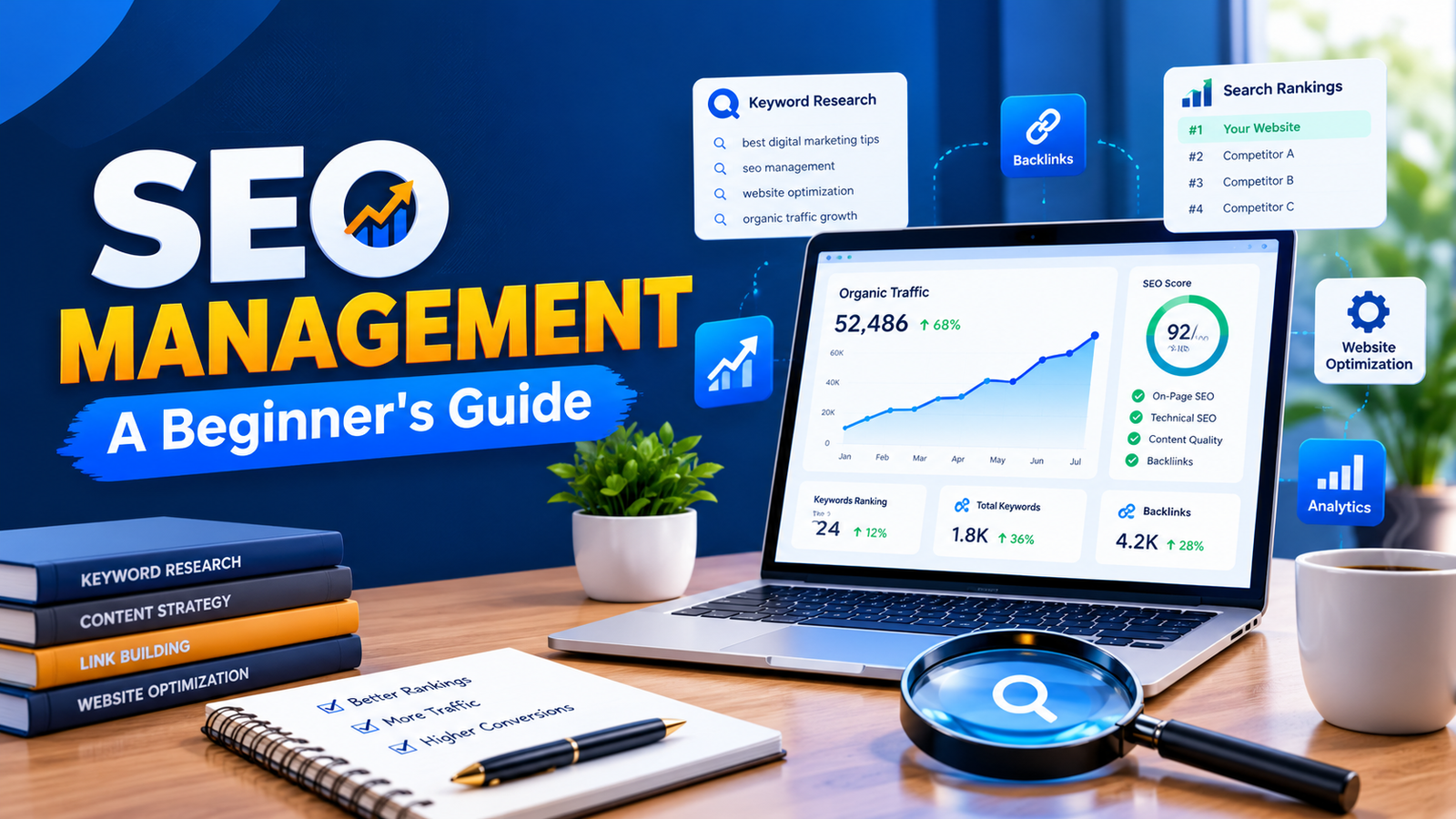
In today’s digital world, having a website is not enough. If people cannot find your website on search engines like Google, you may miss valuable opportunities to attract visitors and grow your business. This is where SEO management becomes important.
SEO management helps you improve your website’s visibility in search results, attract relevant visitors, and build a stronger online presence. Whether you are a blogger, freelancer, small business owner, or digital marketer, understanding SEO management can help you achieve better results online.
In this guide, we will explain what SEO management is, why it matters, and how you can use it to improve your website.
What Is SEO Management?
SEO management is the process of planning, implementing, monitoring, and improving strategies that help a website perform better in organic search results.
SEO stands for Search Engine Optimization. It involves making your website easier for search engines to understand while providing useful content that meets the needs of your audience.
SEO management includes several important activities, such as keyword research, content optimization, technical SEO, link building, and performance tracking.
The goal is not simply to attract more visitors. It is to attract people who are genuinely interested in your content, products, or services.
Why Is SEO Management Important?
Effective SEO management can help businesses and website owners achieve several benefits.
1. Improve Search Engine Visibility
A well-optimized website has a better chance of appearing in relevant search results. Greater visibility can help potential customers discover your website when they search for information related to your business.
However, SEO does not guarantee a particular ranking because search engines consider many factors.
2. Attract Relevant Website Visitors
SEO helps you target keywords that match what your audience is searching for. For example, a digital marketing blog might publish articles about SEO tools, keyword research, or website optimization.
When your content answers these questions effectively, it can attract relevant visitors.
3. Build Trust and Credibility
People often use search engines to research products, compare services, and find solutions to their problems.
Publishing accurate, helpful, and well-organized content can help establish your website as a useful resource in your industry.
4. Support Long-Term Business Growth
Paid advertising can bring traffic while your campaigns are running. SEO can continue attracting organic visitors after your content is published, although rankings and traffic may change over time.
Consistent SEO management helps you identify opportunities, improve existing pages, and adapt to changes in search behavior.
The Main Components of SEO Management
Successful SEO management involves several connected activities.
1. Keyword Research
Keyword research helps you discover the words and phrases people use when searching online.
For example, if you operate a digital marketing blog, your target keywords might include:
- SEO management for beginners
- Best SEO tools for small businesses
- How to improve website rankings
- On-page SEO checklist
- Technical SEO guide
Choose keywords based on search intent, relevance, competition, and your audience’s needs.
Do not focus only on keywords with high search volume. Specific, relevant keywords may attract visitors who are more likely to engage with your content.
2. On-Page SEO
On-page SEO involves optimizing individual web pages to help search engines and readers understand their content.
Important on-page SEO practices include:
- Writing clear and descriptive page titles.
- Creating useful meta descriptions.
- Using headings to organize content.
- Including relevant keywords naturally.
- Writing descriptive image alt text.
- Adding internal links to related articles.
- Creating readable URLs.
- Providing accurate, helpful information.
Avoid stuffing keywords into your content. Your writing should sound natural and provide genuine value to readers.
3. Technical SEO
Technical SEO focuses on the technical aspects of your website that affect crawling, indexing, and user experience.
Important areas include:
- Ensuring search engines can access important pages.
- Checking for indexing problems.
- Improving website loading performance.
- Making the website mobile-friendly.
- Using HTTPS to secure connections.
- Fixing broken links and redirect issues.
- Creating and maintaining an XML sitemap when appropriate.
- Reviewing canonical tags and duplicate content issues.
A website can contain excellent content and still struggle in search results if important technical problems prevent search engines from accessing or understanding its pages.
4. Content Optimization
Content is a major part of an effective SEO strategy.
Create articles, guides, tutorials, and service pages that answer real questions from your target audience.
For example, a website about digital marketing could publish content about keyword research, content marketing, SEO tools, and website performance.
To improve your content:
- Understand the reader’s search intent.
- Answer the main question clearly.
- Use headings and short paragraphs.
- Include practical examples.
- Support factual claims with reliable sources.
- Update outdated information when necessary.
- Add relevant internal links.
Publishing more articles does not automatically produce better results. Focus on usefulness, accuracy, originality, and relevance.
5. Link Building
Backlinks are links from other websites pointing to your website. Relevant, trustworthy backlinks can help search engines understand your website’s reputation and connections within your industry.
You can work toward earning backlinks by:
- Publishing original research and useful resources.
- Creating comprehensive educational guides.
- Building genuine relationships with other website owners.
- Contributing valuable expert commentary.
- Promoting content to relevant publishers and communities.
Avoid buying manipulative links or participating in link schemes. These tactics can violate search engine spam policies and put your website at risk.
6. SEO Performance Tracking
SEO management requires regular monitoring to understand what is working and what needs improvement.
Useful tools include Google Search Console and Google Analytics.
You can monitor metrics such as:
- Organic search clicks.
- Search impressions.
- Click-through rate.
- Average search position.
- Organic landing-page traffic.
- Conversions and inquiries.
- Indexing and technical issues.
Use this information to identify pages that need better titles, more useful content, improved internal links, or technical fixes.
Best Tools for SEO Management
The right tools can make SEO management easier and more organized.
Google Search Console: Helps you monitor your website’s search performance, indexing information, and certain technical issues.
Google Analytics: Helps you understand website traffic, visitor behavior, and conversions.
Ahrefs: Offers tools for backlink analysis, keyword research, and competitor research.
Semrush: Provides keyword research, competitive analysis, site auditing, and other SEO features.
Screaming Frog SEO Spider: Helps you crawl websites and identify issues such as broken links, missing page titles, and duplicate metadata.
Yoast SEO: A WordPress plugin that helps you manage important on-page SEO elements.
Some tools offer free features, while others require paid subscriptions. Compare their current plans before choosing a solution.
Common SEO Management Mistakes to Avoid
Even a well-designed SEO strategy can fail if you make avoidable mistakes.
Ignoring search intent: Your content must address what people actually want to find.
Keyword stuffing: Repeating keywords unnaturally can make content difficult to read and may violate spam policies.
Neglecting technical SEO: Crawling, indexing, and performance problems can limit your website’s visibility.
Publishing low-quality content: Articles created mainly to target keywords without providing meaningful value are unlikely to build a strong audience.
Ignoring mobile users: Your website should be easy to navigate on smartphones and tablets.
Expecting instant results: SEO usually requires consistent work and patience. Improvements may take weeks or months, depending on your website, competition, and the changes you make.
How to Create a Simple SEO Management Plan
If you are new to SEO, start with a manageable plan.
Week 1: Website Audit
Review your website’s structure, mobile usability, page speed, indexing, and existing content. Identify the most important problems.
Week 2: Keyword Research
Find relevant keywords for your audience. Group them by topic and search intent, then decide which pages should target each topic.
Week 3: On-Page Optimization
Improve your most important pages. Review titles, headings, content quality, internal links, and image alt text.
Week 4: Content and Performance Review
Publish useful content, review your Search Console data, and identify the next improvements to make.
After the first month, continue monitoring performance and prioritizing tasks according to their likely impact.
Final Thoughts
SEO management is an ongoing process that combines research, content creation, technical improvements, and performance analysis.
You do not need to implement every strategy at once. Start by understanding your audience, fixing important website problems, and publishing useful content that answers real questions.
With consistent effort and careful measurement, SEO management can help you improve your website’s search visibility, attract relevant visitors, and support your long-term digital marketing goals.
Ready to improve your website’s SEO? Start by reviewing your website in Google Search Console, identifying your most important pages, and creating a practical optimization plan.