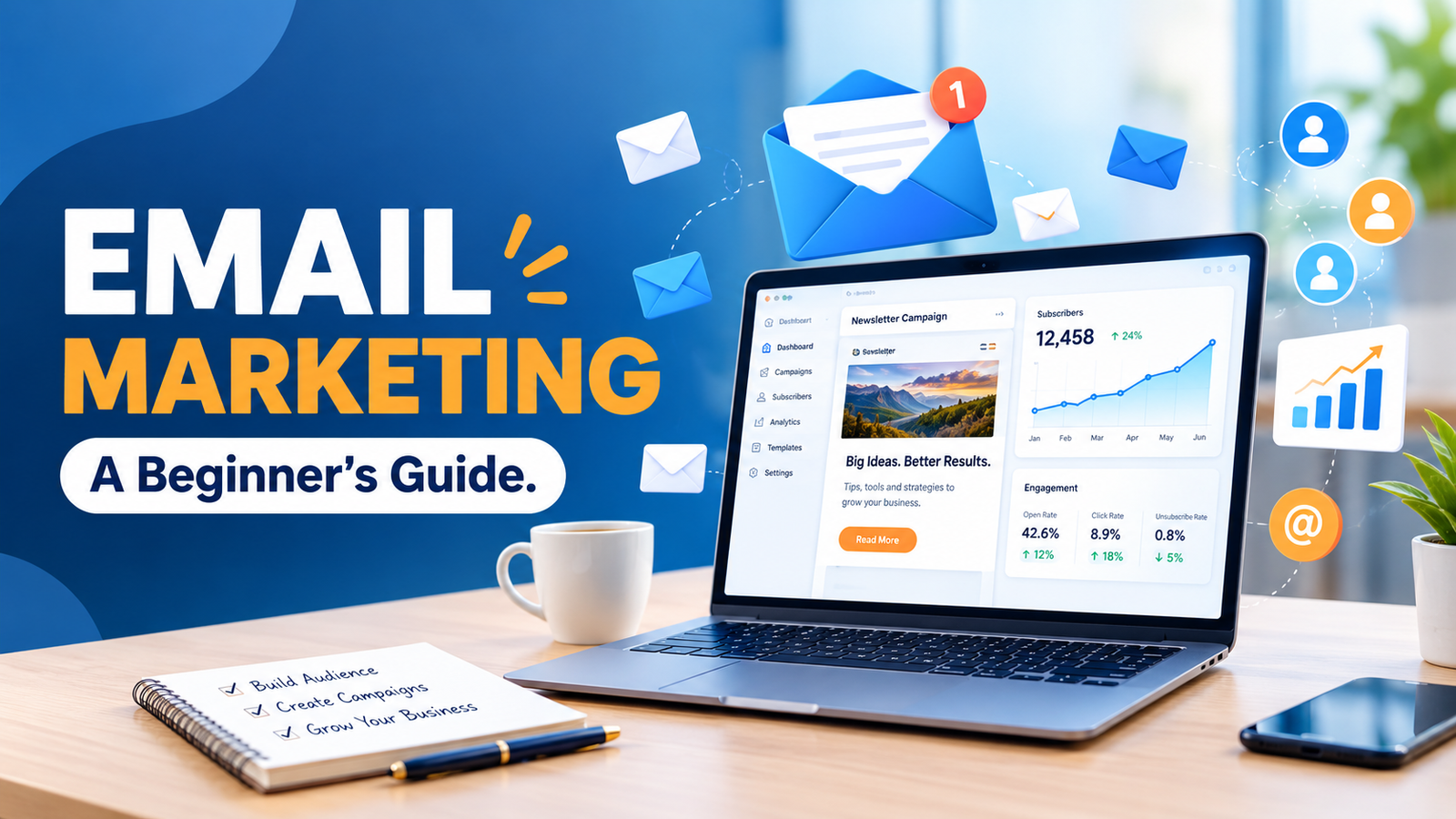
Email marketing is one of the most effective ways to connect with customers, promote products, and grow an online business. Whether you are a beginner, blogger, freelancer, or business owner, email marketing can help you reach the right audience and build long-term relationships.
In this guide, you will learn what email marketing is, why it matters, and how to get started.
What Is Email Marketing?
Email marketing is the process of sending emails to people who have agreed to receive messages from you. These emails can include business updates, helpful tips, product recommendations, special offers, and newsletters.
For example, if you run a blog, you can send your subscribers an email whenever you publish a new article. If you sell digital products, you can use email to introduce your products and share useful information with potential customers.
Why Is Email Marketing Important?
Email marketing offers several benefits for businesses and content creators.
1. Build Strong Customer Relationships
Regularly sharing helpful information allows you to build trust with your audience. Instead of focusing only on selling, provide content that solves your subscribers’ problems.
2. Drive Traffic to Your Website
You can include links to your latest blog posts, product reviews, and website pages in your emails. This encourages subscribers to visit your website and explore your content.
3. Promote Products and Services
Email marketing allows you to introduce new products, share special offers, and recommend relevant services to interested subscribers.
4. Reach Your Audience Directly
Unlike social media posts, which may not reach all your followers, emails go directly to subscribers’ inboxes. However, delivery is not guaranteed, and some emails may end up in spam folders.
How to Get Started With Email Marketing
Starting with email marketing does not have to be complicated. Follow these simple steps.
Step 1: Choose an Email Marketing Platform
First, choose a platform that helps you collect subscribers, create emails, and manage your campaigns. Popular options include Mailchimp, Brevo, and MailerLite.
Compare their current pricing, features, and subscriber limits before choosing one.
Step 2: Build Your Email List
Add a subscription form to your website where visitors can sign up to receive your emails.
You could offer a free checklist, beginner’s guide, or useful resource to encourage people to subscribe. Always obtain permission before sending marketing emails.
Step 3: Create Helpful Email Content
Your emails should provide real value. Share practical tips, useful tutorials, product comparisons, or updates about your business.
Avoid sending promotional messages all the time. A good email should give readers a reason to open and read it.
Step 4: Write an Engaging Subject Line
The subject line is one of the first things people see in their inbox.
Keep it short, clear, and relevant to the email’s content.
For example:
- 5 Simple Ways to Grow Your Online Business
- Beginner’s Guide to Email Marketing
- New Digital Marketing Tips for You
Avoid misleading subject lines that promise something your email does not deliver.
Step 5: Track Your Results
Monitor useful metrics such as delivery rates, clicks, unsubscribes, and conversions. These numbers help you understand whether your emails are reaching people and encouraging them to take action.
Open rates can be misleading because privacy features and email software may automatically register opens.
Common Email Marketing Mistakes to Avoid
Beginners often make a few mistakes when starting email marketing.
- Sending emails without permission.
- Buying email lists instead of building an audience.
- Sending too many promotional messages.
- Using confusing or misleading subject lines.
- Ignoring mobile users.
- Failing to provide an easy way to unsubscribe.
Avoiding these mistakes can help you build a more trustworthy email marketing strategy.
Final Thoughts
Email marketing is a valuable tool for bloggers, entrepreneurs, freelancers, and online businesses. It helps you communicate directly with your audience, share useful information, and promote relevant products or services.
You do not need a large audience to begin. Start by creating a simple signup form, collecting subscribers with their permission, and sending helpful emails consistently.
Remember, successful email marketing is not just about selling products. It is about building trust and providing value to your readers.
Ready to get started? Choose an email marketing platform, create your first signup form, and begin building meaningful relationships with your audience.